
When a viewer presses play on a movie site, the video rarely arrives as one…
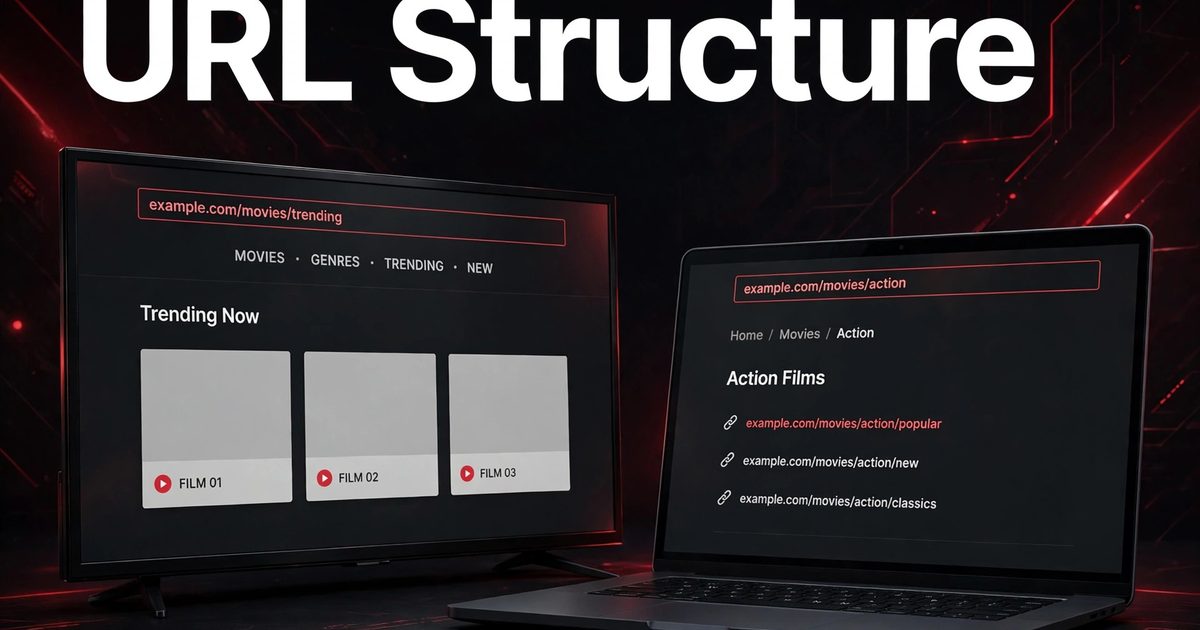
Movie Website URL Structure: The Ultimate SEO Guide 2027
A movie site is found one address at a time. A viewer who follows a link, a search engine that reads a page, and a returning visitor who saves a bookmark all depend on the same thing: an address that names the page plainly and still leads to the same page next month. Movie website URL structure is therefore the pattern behind every address on a movie site, decided once and kept steady as the catalog grows.
This guide covers that pattern in order: what an address does for a page, one address per record, readable patterns for each record type, addresses for genre and taxonomy pages, consistency across the catalog, what to do when an address must change, and the habits that create duplicate or unreadable addresses. No ranking is promised and no price is quoted, because movie website URL structure improves how a catalog is found, shared, and maintained; it does not guarantee a position.
Quick answer
For a movie site, movie website URL structure starts with five jobs done together: one address for each record, a readable pattern that names the record, the same pattern for every record of a type, stable addresses that do not change without a reason, and a safe path when a change is unavoidable.
- One address first: every film, series, season, episode, and person reached by a single address, not by several.
- Readable pattern second: addresses that name the record in plain words, not in numbers and parameters alone.
- Consistency third: the same shape for every film page, every series page, and every person page.
- Stability fourth: addresses kept unchanged once they are shared, linked, or saved.
- Safe changes fifth: when an address must move, the old address leads visitors to the new one.
Follow that order, and movie website URL structure stops being a technical detail and becomes a promise to every viewer and search engine that meets the catalog: the address you have will still work.
1. What an address does for a page
An address is the name a page is known by outside the site. A viewer copies it, shares it, saves it, and types it back later. A search engine lists it, follows it, and returns to it. A link from another page points to it. When an address is readable, a viewer can guess what waits behind it before clicking.
That is why movie site URL pattern structure deserves a decision before the catalog grows. Decide the pattern while the catalog is small, test it on a film, a series, and a person, and only then import at scale.
2. One address per record
The first rule is simple: each record gets one address, and each address leads to one record. A film should not be reachable by two different addresses, one from browsing and one from search, because two addresses for one film split its links, its saves, and its history between them.
Duplicate detection at import helps here, because the same title imported twice creates two records and therefore two addresses. Check after import that each new title appears once, under one address, and that its cast and genres link to the same single pages they link to everywhere else, as movie website URL structure requires.

3. A readable pattern for each record type
Each record type needs a pattern that fits what it is. A film page address should name the film, plainly and briefly, so two films with similar names are easy to tell apart. A series page address should name the series. A season page should show that it belongs to its series, and an episode page should show its season and its place in the viewing order.
Keep each pattern short. An address that carries every fact about a record — title, year, genre, cast, and more — becomes hard to read, hard to share, and hard to type. Movie website URL structure favours brevity here: the address names the record, and the page does the describing.
4. Addresses for genre and taxonomy pages
Taxonomy pages need addresses too, and they need the same care. A genre page, a year page, a country page, and a language page are each a browsing destination of their own, and each should have one readable address that names its label. When a genre is spelled two ways, it does not only split a browsing path into two; it also creates two genre addresses where one should exist, each listing only part of the titles that carry that label.
Shared labels must therefore be spelled alike on every record, and each label should resolve to a single page, which is what movie website URL structure requires. Check a genre page after import and confirm it lists every title that carries that label, not only the titles imported most recently.
5. Keeping the pattern consistent as the catalog grows
Consistency is what turns a set of addresses into movie website URL structure. Every film page follows the film pattern. Every series page follows the series pattern. Every person page follows the person pattern.

6. When an address must change
Sometimes an address must change. A title is corrected, a person is entered under the right spelling, or a section of the site is rebuilt. The change itself is not the problem; leaving the old address dead is. Every link, save, share, and listing that pointed to the old address breaks at once, and viewers who trusted it meet an error instead of the page they wanted.
The safe habit in movie website URL structure is to make the old address lead to the new one. Before changing an address, list where the old one is used: links inside the site, links from other pages, saves, and shares. After the change, open the old address and confirm it arrives at the new page, not at an error.
7. Avoiding duplicate and parameter-heavy addresses
Two habits create the most wasted addresses on a movie site. The first is duplication: the same record reachable by more than one address, through a second import, a second spelling, or a second route to the same page. The second is parameter-heavy addressing: pages whose addresses hide the record behind a string of numbers, filters, and session details, so the address says nothing about the page and changes each time it is generated.
Both habits are fixed by the same movie website URL structure routine. Import carefully, with duplicates flagged before a second copy is created. Keep labels consistent, so one genre and one person each resolve to one page. Use the readable pattern for every record page, and reserve filtered or sorted views for browsing within the site, not as the address a record is known by.

8. Movie website URL structure checklist
The table below turns the points above into a checklist, using only points already explained here. Use it for launch, for later reviews, and for every large import. Use it for launch, for later reviews, and for every large import.
| Part | Done when |
|---|---|
| One address per record | Each film, series, season, episode, and person has a single address |
| Readable pattern | Each address names its record in plain words |
| Type patterns consistent | Same shape for every record of a type |
| Taxonomy addresses single | Each genre, year, country, and language label has one address |
| Labels consistent | Shared labels spelled alike on every record |
| Addresses stable | No address changes without a reason and a safe path |
| Old addresses lead onward | A changed address sends visitors to the new page |
| Duplicates checked | Duplicates flagged at import; thin or copied pages avoided |
9. Movie website URL structure with MovieEngine
For a WordPress movie site, movie website URL structure sits inside a larger build of catalog, title pages, search, watchlist, and playback. Movie Engine (Free 1.0.8 and Pro 1.0.8, by ThemePul) provides the catalog behind the pages in Free, with movies, TV series, seasons, episodes, and people as linked records, taxonomies for genre, year, country, language, network, and tags, cast and crew profiles, and single-title TMDb import with duplicate detection.
Free also provides SEO title and description templates with title, year, genre, overview, and site-name placeholders, plus JSON-LD schema for each record type and Open Graph and Twitter Card controls. Scheduled bulk import is a Pro area, not Free. Read the documentation and installation guide, and try the live demo to see a catalog, title pages, and person pages in action.

10. Choose, then test before you commit
Choosing well means testing movie website URL structure honestly before trusting the whole catalog to one pattern. On a test site, import a handful of real titles and check a film, series, season, episode, and person page for a single readable address each, a genre page that lists every title carrying that label, and links that land on the expected page.
That test is how an address pattern should be judged: tested, not assumed. The monetization overview explains the available models, and current pricing is separate from prices you set for your own viewers.
Frequently asked questions
Should every record have its own address?
Every record a viewer might look for should: films, series, seasons, episodes, and people. Without its own address, a record cannot be linked to, saved, or found on its own.
What makes an address readable?
An address that names its record in plain words, in a short and consistent movie website URL structure pattern. For this kind of pattern, readability means a viewer can tell what page waits behind the address before clicking, without needing the page itself to explain it.
What should happen when an address changes?
The old address should lead visitors to the new page, and links inside the site should be updated to the new address directly, as movie website URL structure requires. A changed address left dead breaks every link, save, and share that pointed to it.
Does address work change the rights a site needs?
No. The site owner must hold the rights to every title offered for playback, and expired titles must be removed or renewed cleanly.
Conclusion
Good movie website URL structure is a sequence: one address per record, a readable pattern for each type, consistent taxonomy addresses, stable addresses, and a safe path whenever a change is unavoidable.
If your plan involves this kind of pattern on a movie site, start with the checklist, publish only titles you have rights to, and test real addresses the way viewers and search engines meet them. Then read the documentation, try the live demo, and check current pricing before you commit.
Related Posts



Comments (0)